
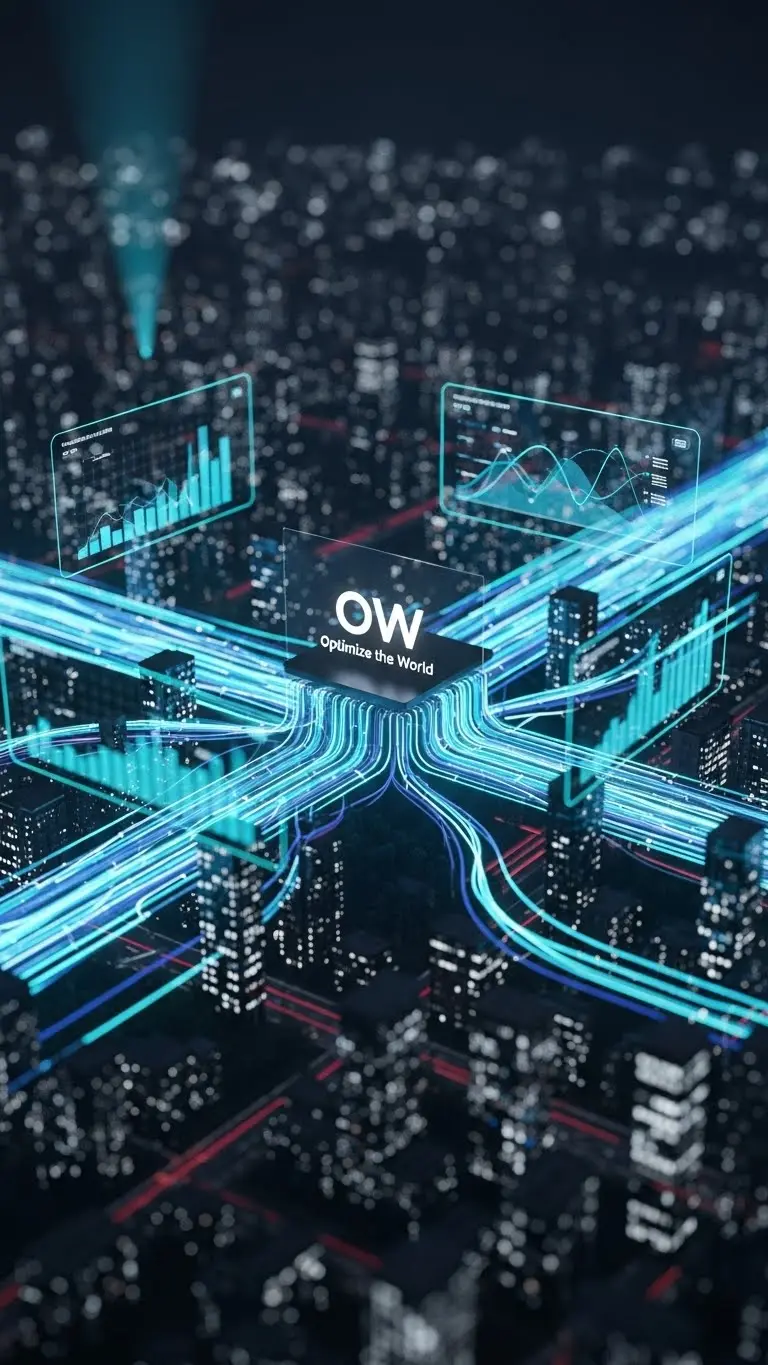
How does your system work?
Costs, delays, and efficiency levels emerge from the system's structure.
OW analyzes this structure to make system behavior visible.
Operational Cost Dynamics
How system structure shapes costs.
Reveals which cost patterns are structural and which are driven by operational choices, demand variability, and network design.
Network Efficiency & Flow Logic
Movement and allocation, not just routes.
Shows where capacity exists but flow breaks down due to allocation logic, sequencing, or network interactions.
Reliability & Time Consistency
Why timing drifts over time.
Explains recurring delays by exposing gaps between planned schedules and actual system behavior.
Asset Utilization Intelligence
Idle capacity is a signal.
Identifies imbalance, underused resources, and structural idle time — not just utilization percentages.
System Signals That Reveal Improvement Potential
These signals help OW understand how your system behaves and where meaningful improvement is realistically possible.
Cost Sensitivity Range
Shows how sensitive your operating costs are to change, based on patterns observed in comparable systems.
Cost sensitivity is shaped by demand volatility, contractual structure, and fleet composition.
Optimization Leverage Index
Indicates how much improvement power is unlocked as data becomes more structured and connected.
Improvement potential increases as systems become more observable and connected.
Schedule Robustness Signal
Shows how well schedules absorb disruption in real-world operations.
Reliability emerges from feedback loops, not from static plans.
Utilization Balance Indicator
Reveals whether capacity is used evenly or wasted in hidden ways.
Empty kilometers and idle time are symptoms of imbalance, not standalone metrics.
Explore how these signals look in your own system
How Do Systems Learn and Improve?
At OW, each cycle turns operational data into deeper insight, smarter actions, and a clearer understanding of how your system truly works.
Structure Reality
Understand how the system actually operates by collecting and integrating data from across the entire infrastructure — not how it was originally designed to work.
Model the System
Reveal hidden patterns, dependencies, and bottlenecks by transforming raw metrics into system models and intuitive visual representations.
Navigate Constraints
Evaluate realistic options by balancing cost, policy, capacity, and service trade-offs within real operational limits.
Execute & Learn
Apply improvements, measure real-world impact, and feed performance results back into the system to continuously refine future actions.
Continuous learning — every loop strengthens the next
A Practical Example: OW Suite™
Modular intelligence built for public transport and urban mobility systems
OW Suite is a collection of tightly connected modules, each addressing a critical layer of urban mobility — schedules, fleets, passengers, and costs — all powered by a shared analytical backbone.
TransitOpt
Adaptive scheduling based on real passenger demand, not static assumptions.
FleetOpt
Smarter vehicle and depot allocation across the entire network.
RiderSense
Understand passenger behavior beyond simple boarding counts.
CostLogic
Make operational cost trade-offs visible and explainable.
12-Week Optimization Pilot
From data understanding to scalable, real-world solutions
System Discovery & Data Structuring
Operational data mapping, constraint identification, and system setup
Decision Baseline Modeling
Understanding current system behavior, inefficiencies, and trade-offs
Optimization & Scenario Evaluation
Testing decision alternatives under real-world constraints
Institutional Learning & Scaling
Interpreting outcomes, refining models, and preparing system-wide adoption
From complexity to decision clarity — in 12 weeks.
Our Security Approach
Designed for organizations where transparency, accountability, and compliance are non-negotiable.
Regulatory Compliance
GDPR & KVKK aligned by design
Data protection is enforced at every system layer.
End-to-End Data Protection
AES-256 encryption at rest and in transit
No raw operational data is exposed outside controlled pipelines.
Certified Security Frameworks
ISO 27001 aligned processes
Security is operationalized, not documented.
Decision Auditability
Every model, parameter, and output is traceable
Decisions can be explained, reviewed, and defended.
Are Your Systems Making the Right Decisions?
Before optimizing your system, OW helps you understand how your system actually works — using your real data, constraints, and operational rules.
Explain before you optimize
Decisions, not dashboards
Scientific clarity over generic promises
A structured 12-week decision readiness phase
A hands-on evaluation of your data, operational constraints, and decision logic — grounded in real system behavior, not assumptions.